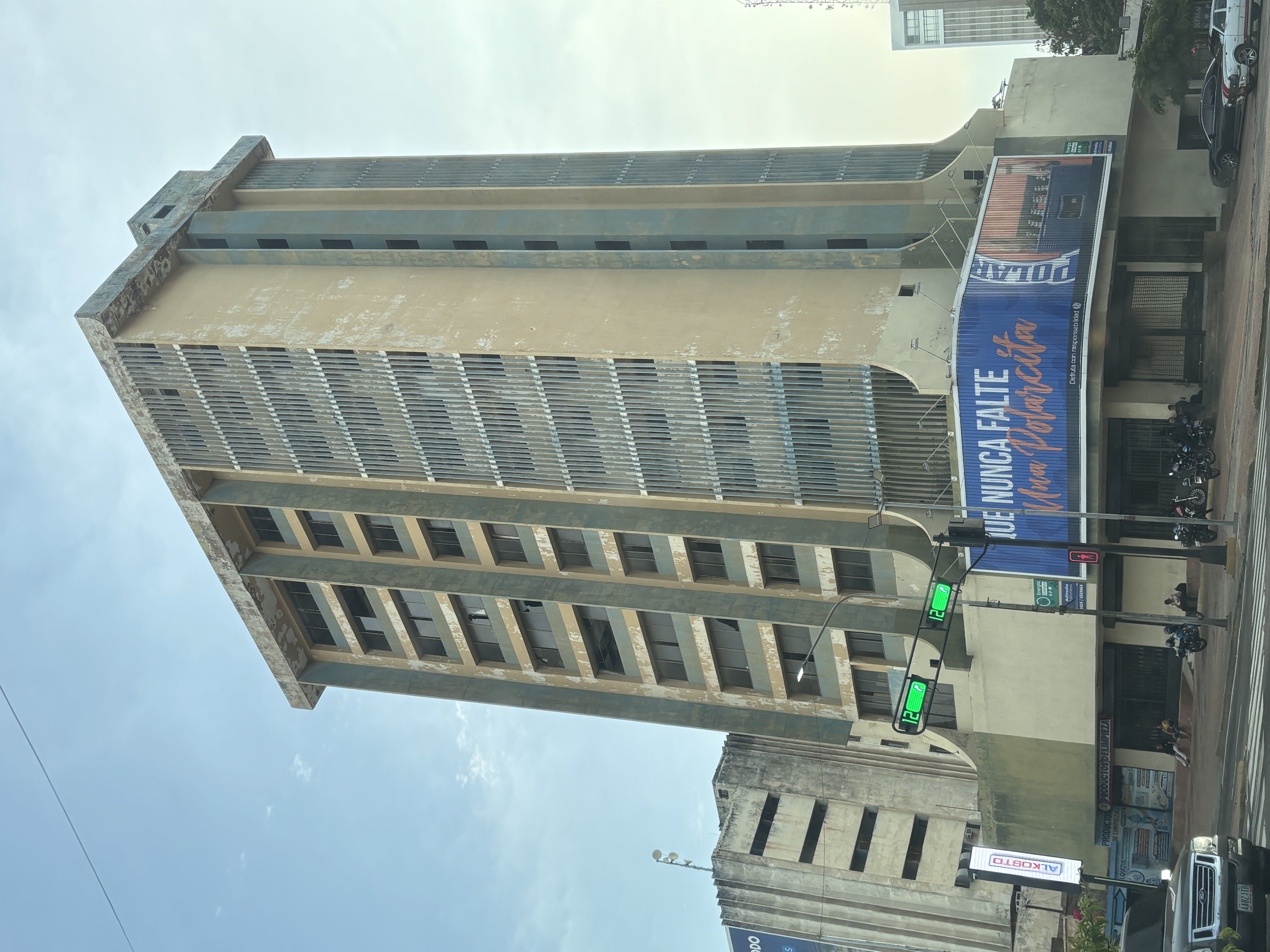
September 2026 · Reflections · Maracaibo
Recalibrating Reality:
Returning to Maracaibo and Its Impact on My Work
By Daniel Velazquez
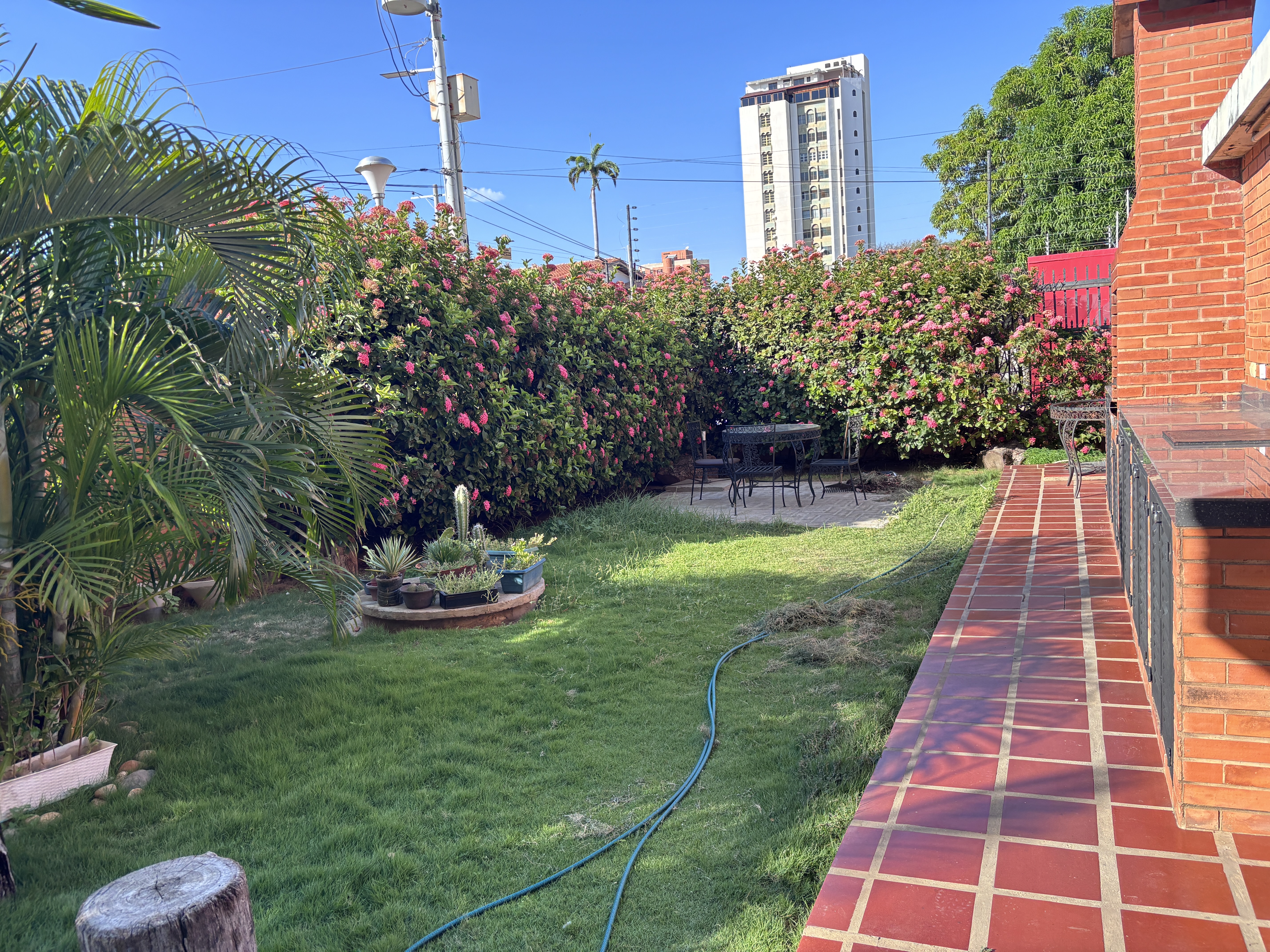
I'm having coffee in the park of the building where my grandfather lives, and the heat of Maracaibo feels strangely familiar. It's not just the temperature — it's the light, the humidity that lingers on the skin, the way the sun cuts through the palms and draws long shadows across the grass. For years I've been painting this city from a distance, from a studio in Vancouver, rebuilding it with memory. And now, sitting here, I realize that memory had filed down the edges: it had kept the light, but not the weight of the air.
The decision to come back wasn't easy. Maracaibo is the city where I learned to look, but it's also the city I left. Returning means a recalibration: walking the corners again, measuring distances with the body rather than with memory. I got off at the intersection of Delicias and 5 de Julio and felt the landscape looking back at me. The architecture, worn by time and salt, has an honesty that photography never manages to capture — a texture that only oil can translate.
Sequence of works
Maracaibo, painted from the studio
The purpose of this article is to convey how this return is reshaping my work. Before coming, I had already tried to fix the city on canvas: the Basilica at sunset, my grandfather's portrait, the Church of Santa Lucía. They were works made with nostalgia. Now, seeing them beside the real city, I understand what they were missing and what, perhaps, they got right.
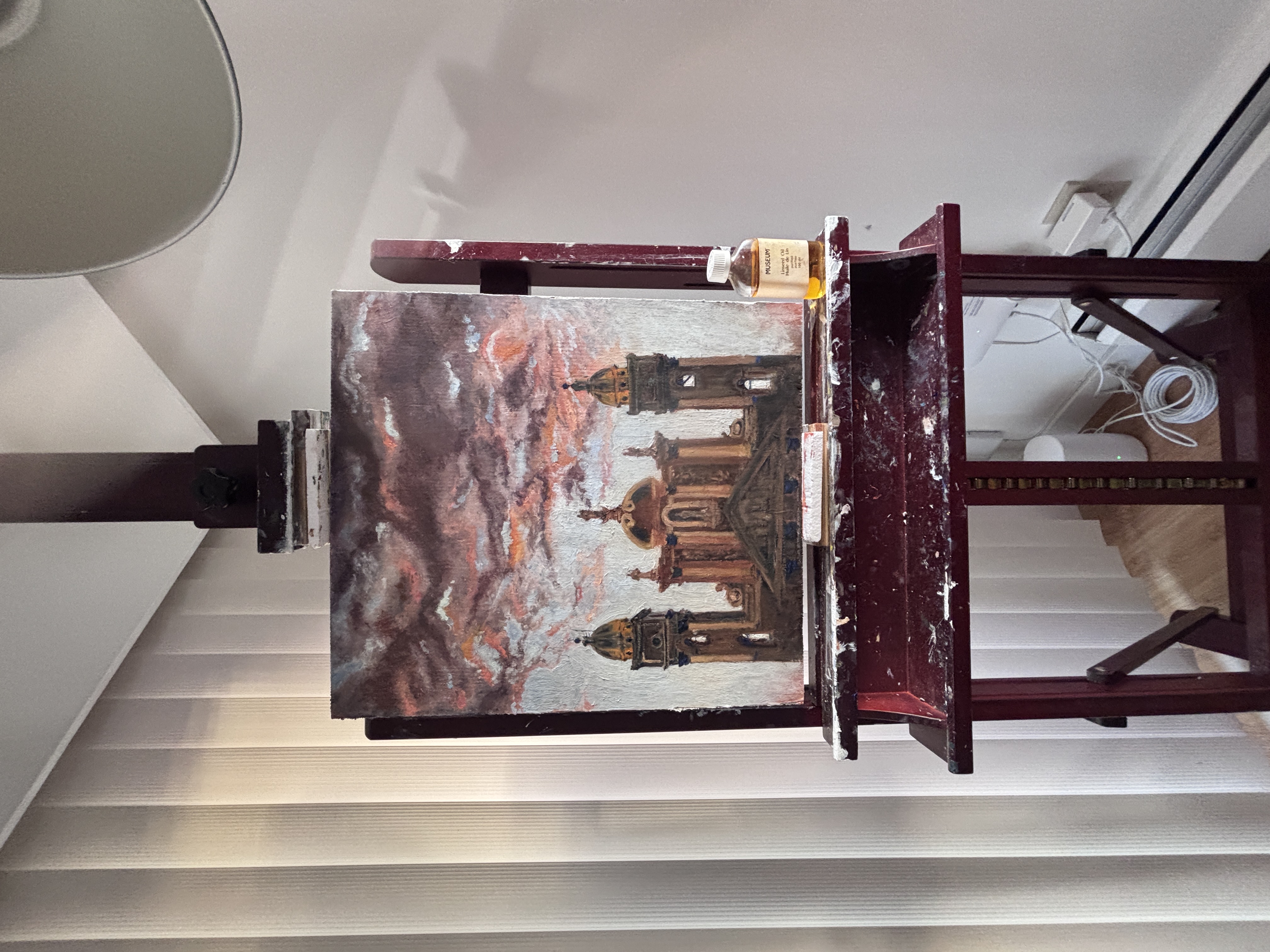
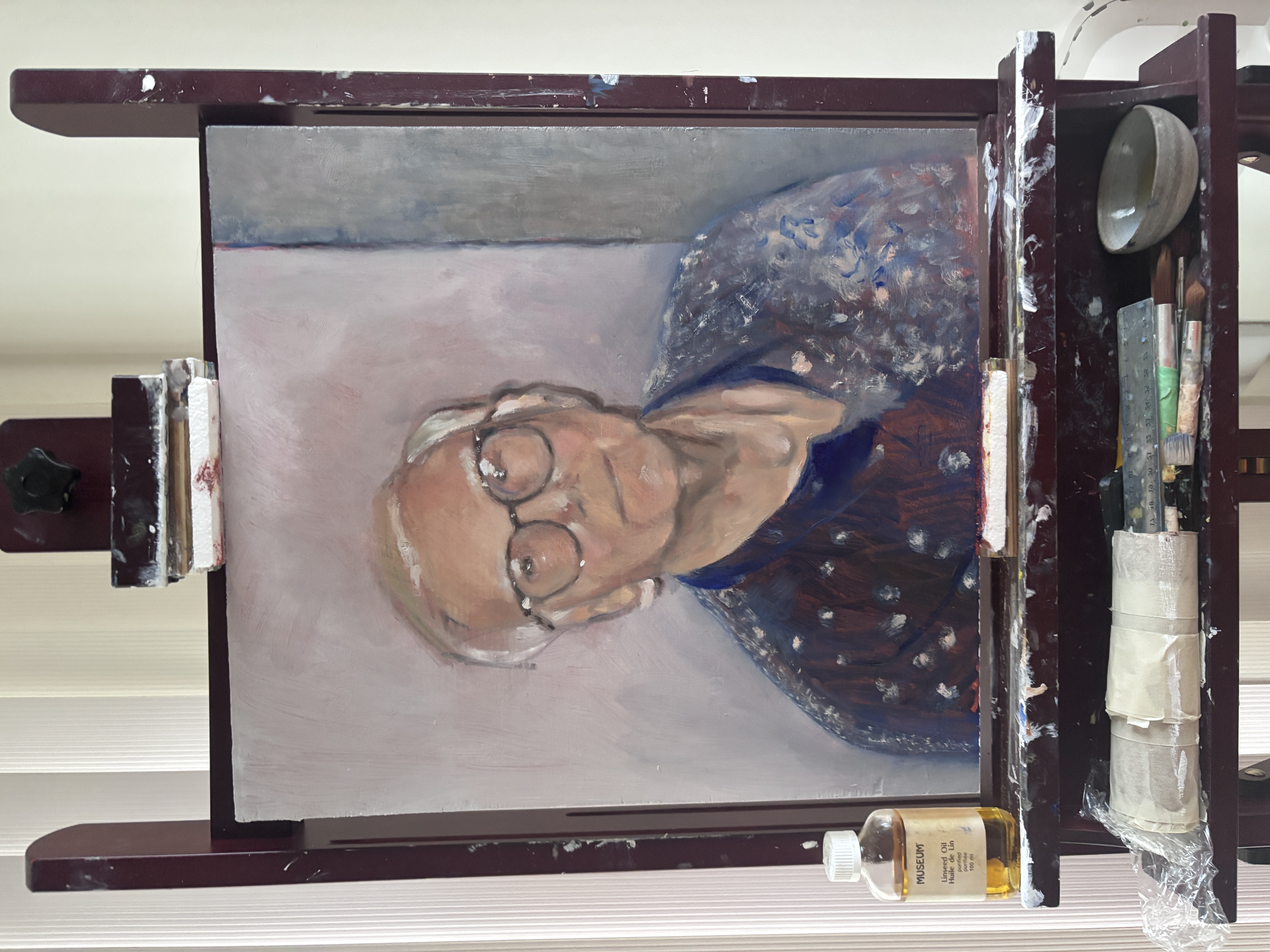
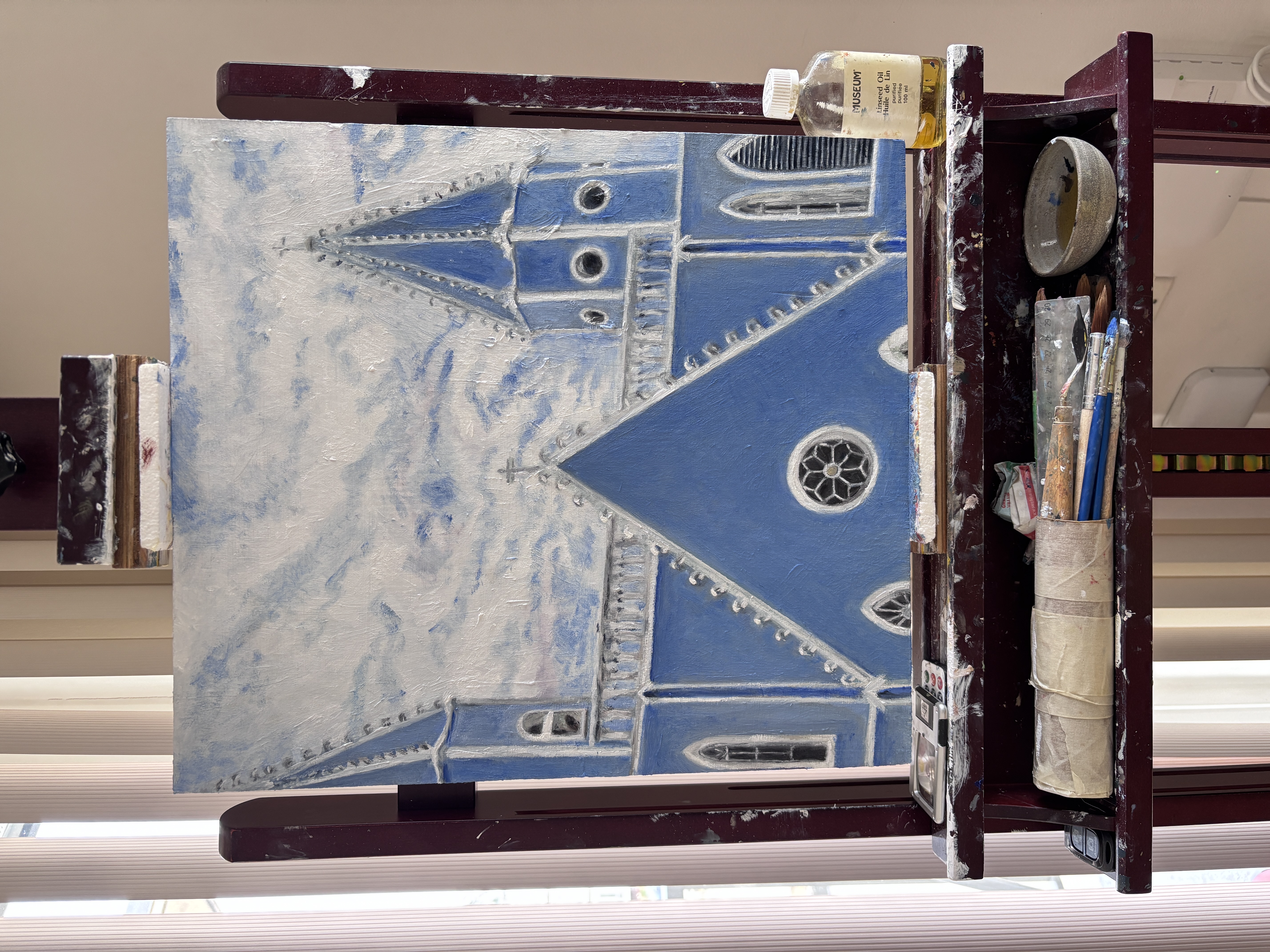
Painting a place from memory is a conversation with absence. Painting it again is a conversation with presence — and presence always has more noise.
Encounters
Family and the scene that follows
Family is still here, and that's the first thing that recalibrates. There's a continuity in the gestures, in the conversations that pick up where they left off years ago, as if time were a canvas only waiting for another layer. During my stay, I also rediscovered that the art scene in Maracaibo is still alive — perhaps more alive than ever. I met with the artist Johan Galué and with Pedro Portillo at Tarsinian Gallery, and the encounter was the kind that reorders the notebook.
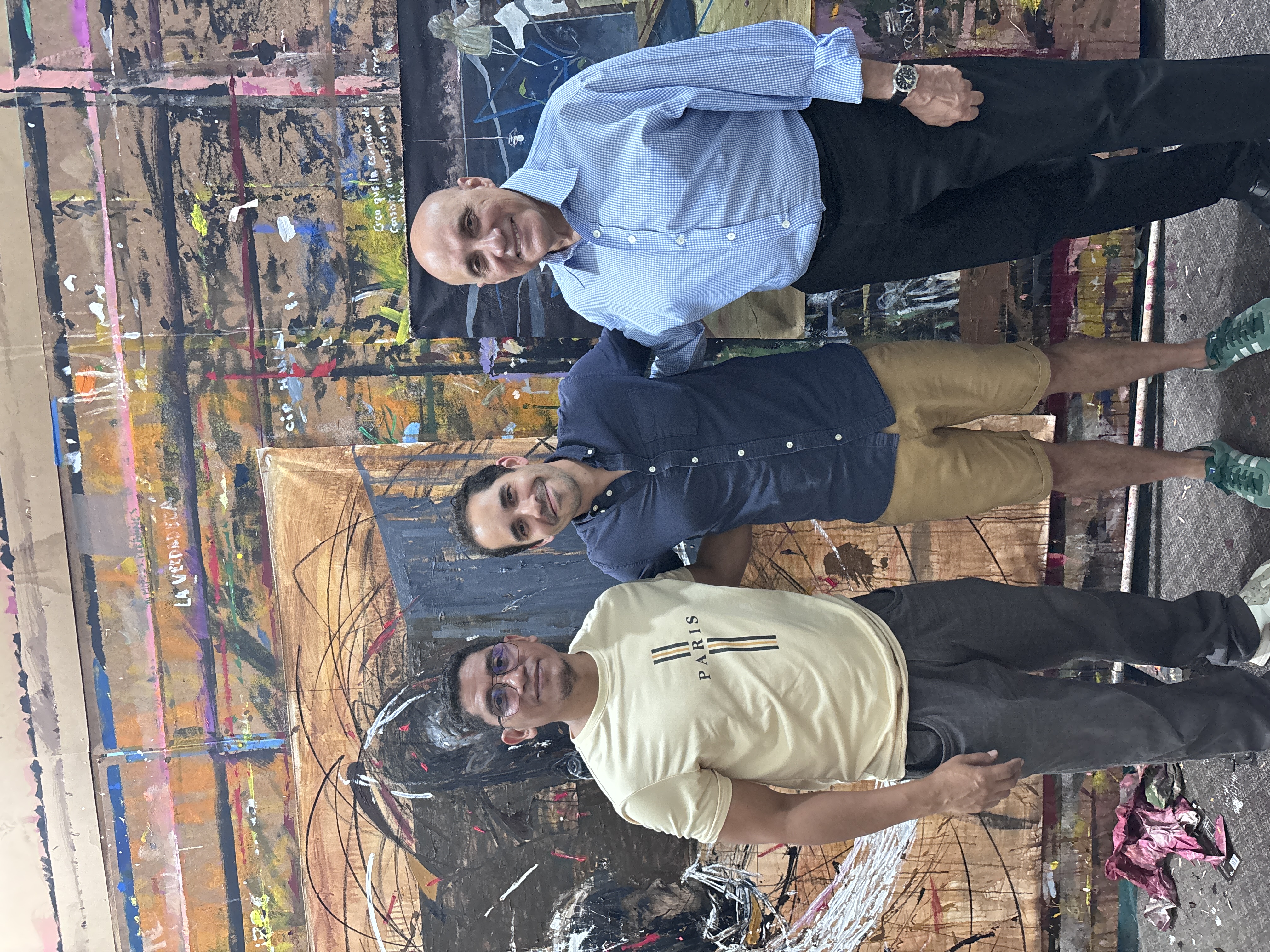
Johan Galué's studio
Neosurrealism and matter
Johan showed me his neosurrealist work, and seeing it in his own space was another way to recalibrate. His studio is an ecosystem of matter: open tubes, brushes wrapped in tape, enormous canvases where color accumulates in geological layers. There's a freedom in his process that reminded me why I started to paint — not to control reality, but to negotiate with it.
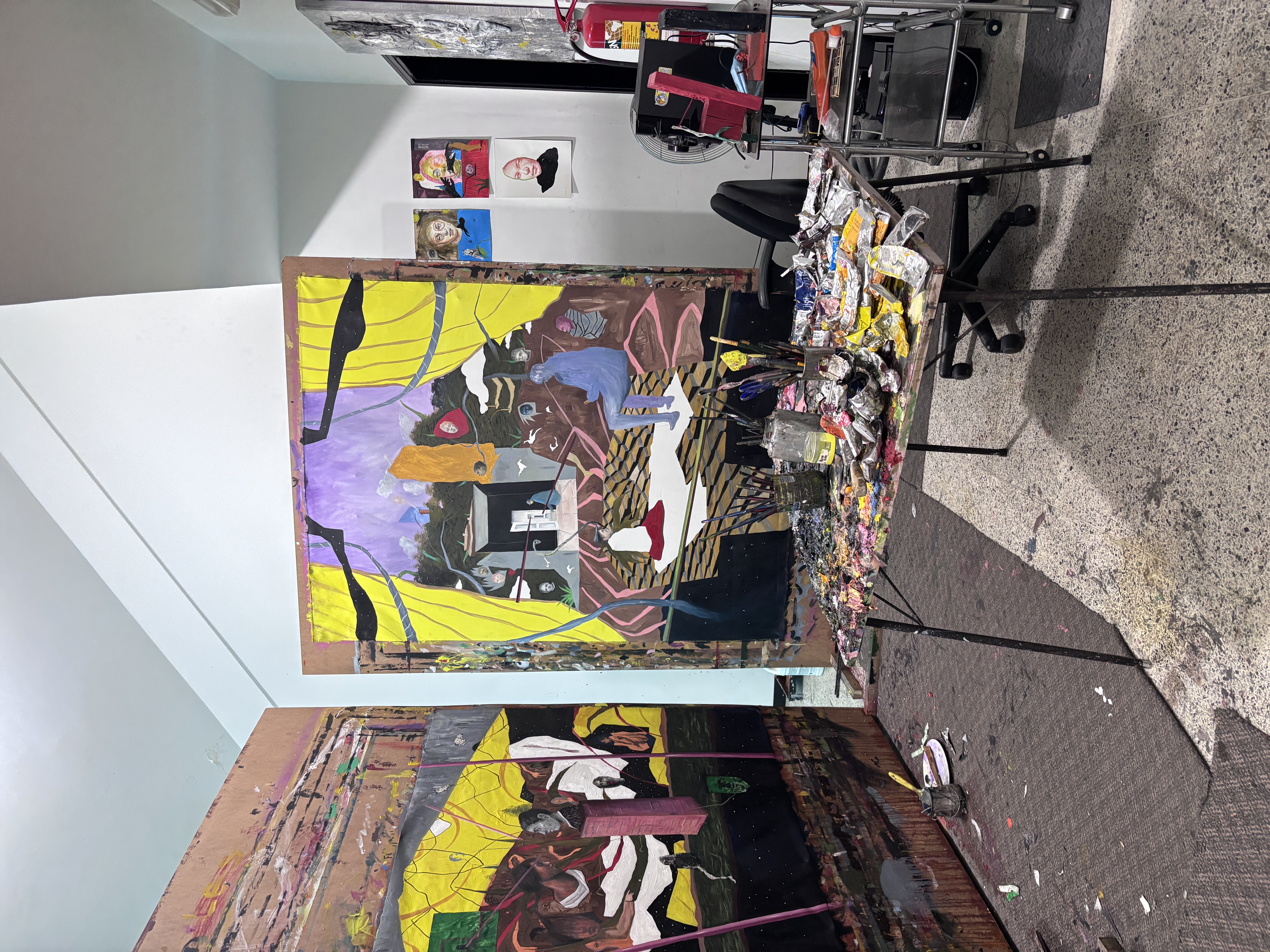
Seeing his work made me ask myself: what would happen if I let Maracaibo enter my canvas with that same disorder, that same density? My impressions have always sought structure — the light, the geometry of the street — but the real city is also chaos, humidity, superposition. Perhaps the next body of work will have to allow more noise.
Closing
Connecting with the past to paint the present
Connecting with the past isn't going backward: it's tuning the instrument. Returning to Maracaibo has given me back the real scale of things — that of the body, of the climate, of relationships that don't fit on a canvas. Leaving the studio and walking the city I paint has been, literally, a recalibration of the gaze. What I used to reconstruct with memory, I now measure with my feet.
My deepest gratitude to my family, to Johan Galué and Pedro Portillo, and to Tarsinian Gallery for opening its doors to me. This return doesn't close a chapter: it opens the next one. The city I used to paint from afar is here now, and the canvas will have to make room for it.
Daniel Velazquez
Painter · Maracaibo / Vancouver · September 2026

