March 2025 · Critique Event
Mapping Perception: The Evolution of an Impressionist View
By Daniel Ali Velázquez de Pool
The Methodology of Sight
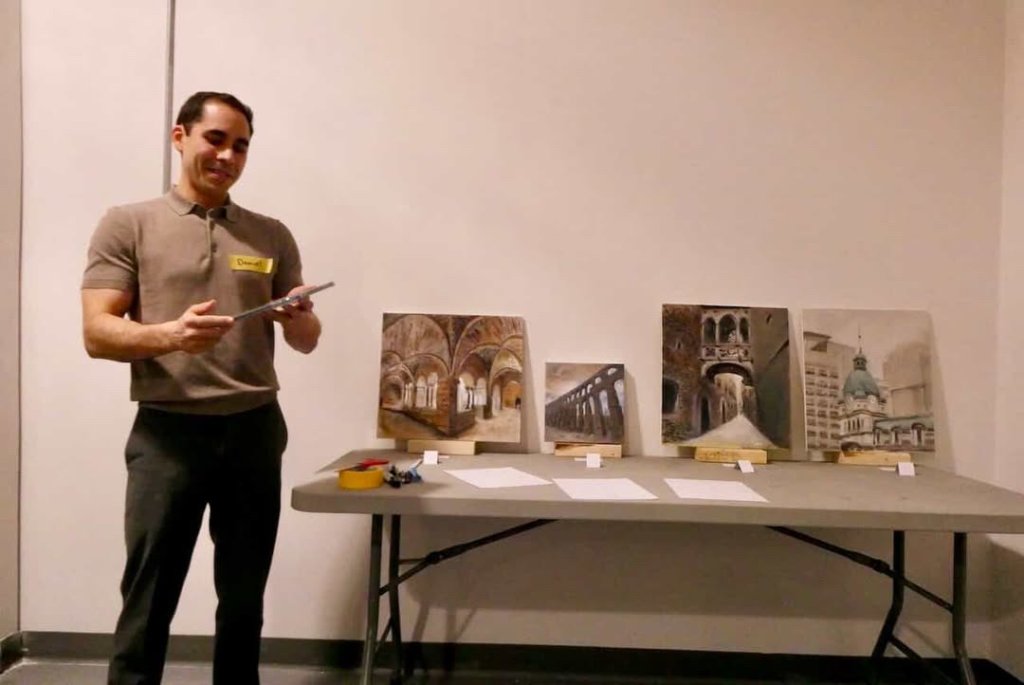
In my recent series featuring Segovia, Le Pont del Bisbe, and Saint Michel, I wanted to move beyond my own eyes and understand how a viewer actually "enters" a painting. I invited participants to map their raw, intuitive reactions on a simple two-axis grid:
- Technique: Structured ↔ Loose
- Expression: Calm ↔ Intense
The goal was not to measure "correctness," but to capture perception in motion. What emerged was a visual field of clusters, divergences, and unexpected alignments.
The Data: A Visual Field of Perception
The following metrics represent the "coordinates" of audience perception. Negative values indicate a lean toward looseness in technique and ambiguity in expression.
| Painting | Avg. Technique | Avg. Expression | Tech Spread | Expr Spread |
|---|---|---|---|---|
| Saint Michel | -2.16 | -3.37 | 15 | 19 |
| Segovia Aqueduct | -1.32 | -1.47 | 13 | 16 |
| Le Pont del Bisbe | -1.82 | -0.53 | 14 | 15 |
Artistic Insight · 1 of 3
Saint Michel: The Emotional Mirror
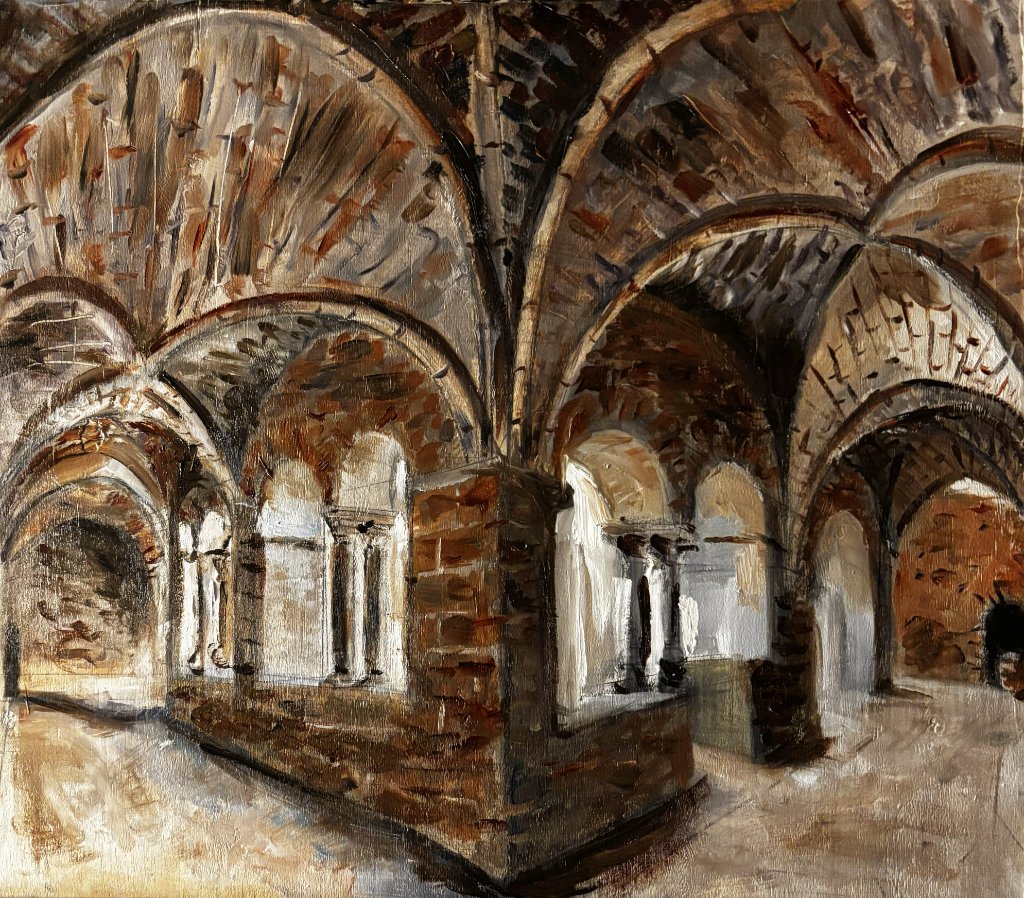
Saint Michel generated the most fragmented response, holding the widest expression spread (19). Because the brushwork was perceived as the loosest (−2.16), it didn't dictate a single mood. Instead, it acted as a reflective surface. Some felt elevation; others felt heaviness.
Ambiguity is not a lack of clarity — it is an invitation for the viewer to co-create the meaning.
Artistic Insight · 2 of 3
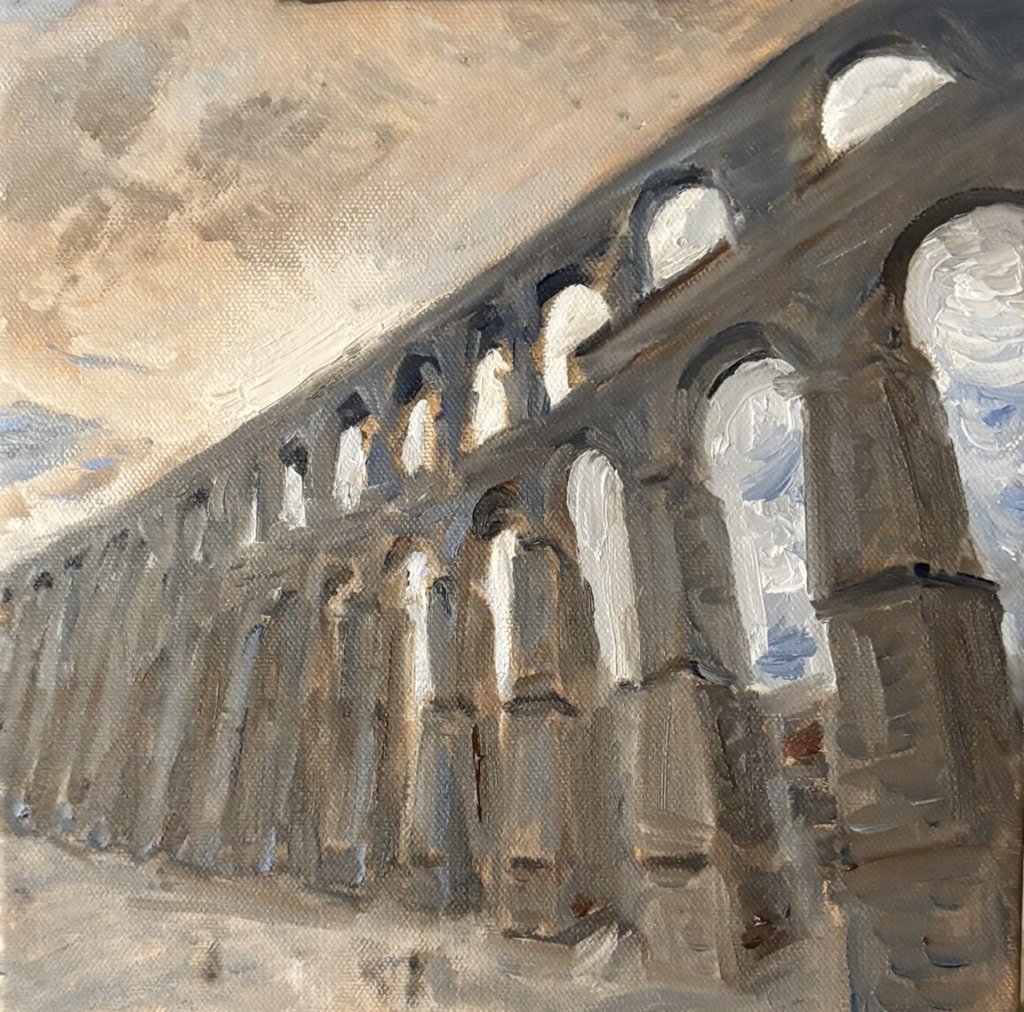
Segovia Aqueduct: The Truth of Light
Segovia was technically unfinished during the study, yet it was the most "resolved" in the eyes of the public. The distribution of light created a visual hierarchy that the brain read faster than the missing structural details.
A painting is finished not when the last stone is drawn, but when the luminous coherence allows the viewer to experience the work as a whole.
Artistic Insight · 3 of 3
Le Pont del Bisbe: The Mechanics of Invitation
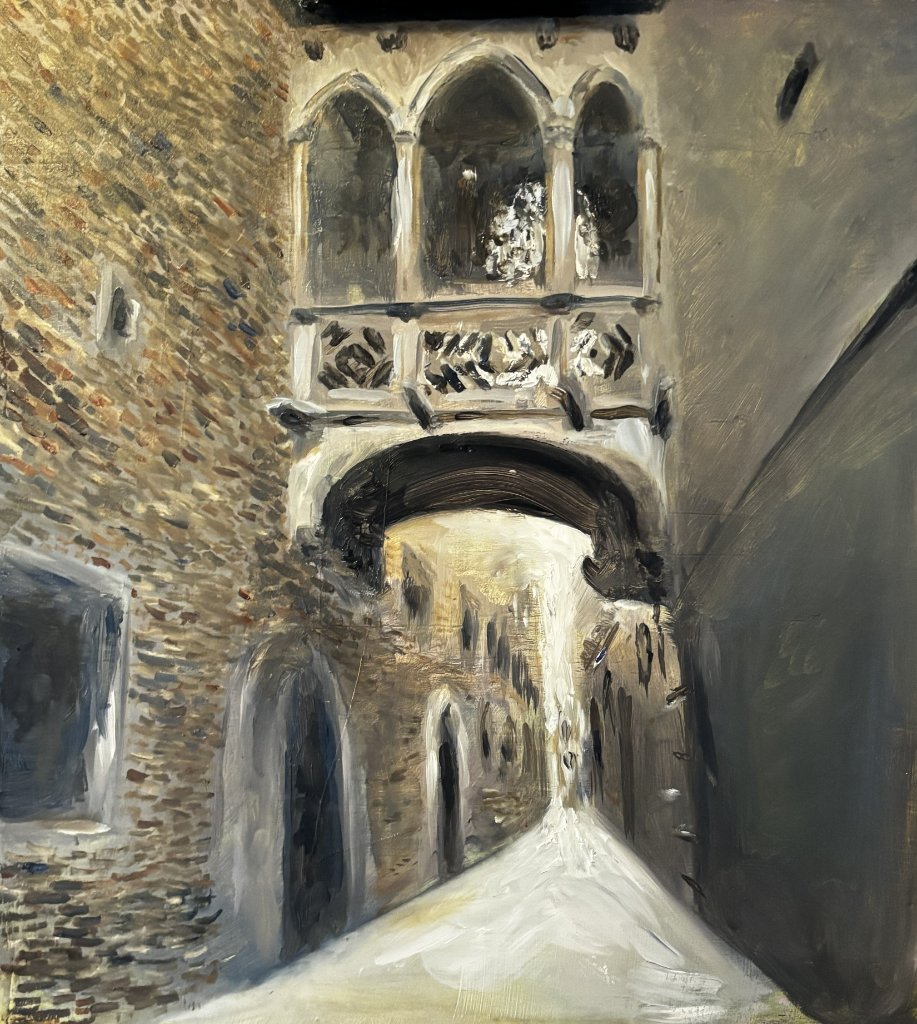
Le Pont del Bisbe revealed a quieter but equally compelling pattern. While the technique was perceived as loose (−1.82), the emotional response was the most stable and neutral of the set.
One viewer described the work as simply "inviting." This aligns with the architectural perspective of the bridge, which functions as a literal entry mechanism — positioning the viewer inside the composition rather than outside it.
Success in architectural impressionism lies in guiding attention invisibly — creating a space that is entered before it is analyzed.
The Evolution
Shaping the Maracaibo Series
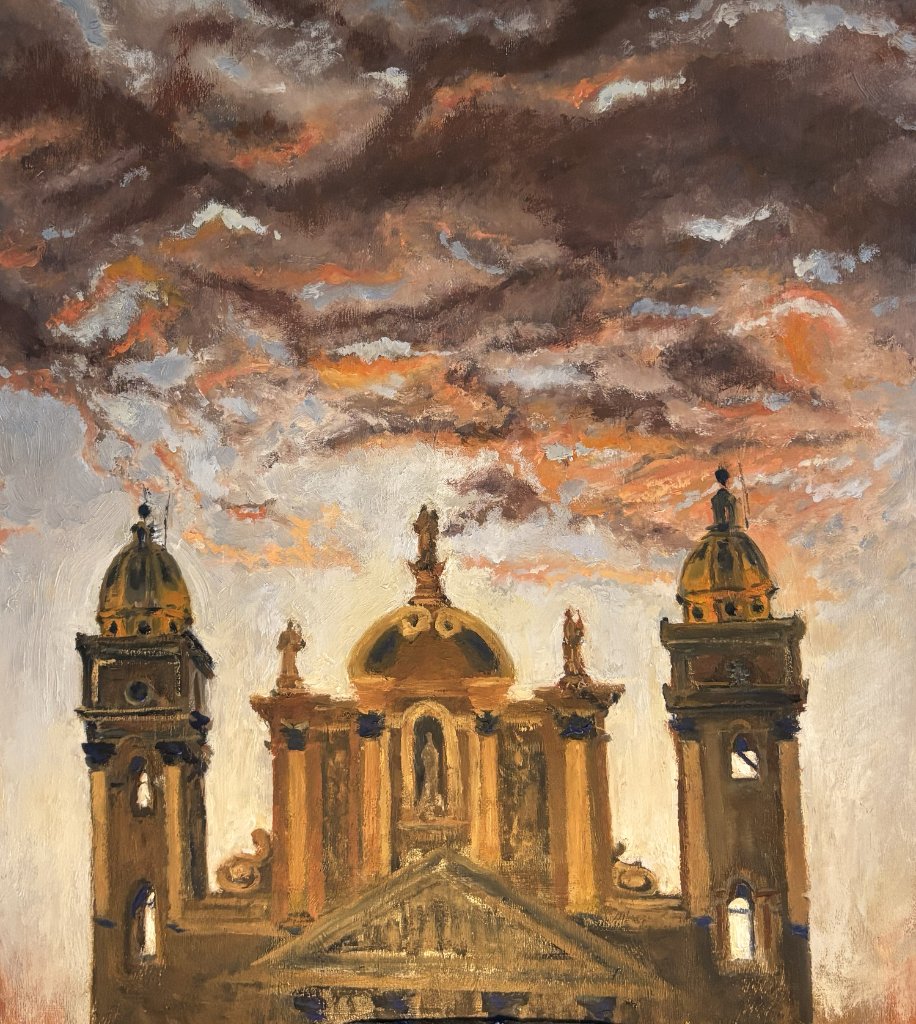
These findings became the foundation for my current Maracaibo Series. The data validated my shift toward blurry, impressionistic backgrounds to highlight high-focus subjects.
In the portrait of the Old Man from Maracaibo, I deliberately leave the surrounding space raw and unfinished. By trusting the "blur," I force an intimate encounter with the subject's face. I've learned that the rugged application of oil on a plywood panel speaks more to the resilience of the subject than a polished, detailed background ever could.
Next Chapter
A New Collective Study
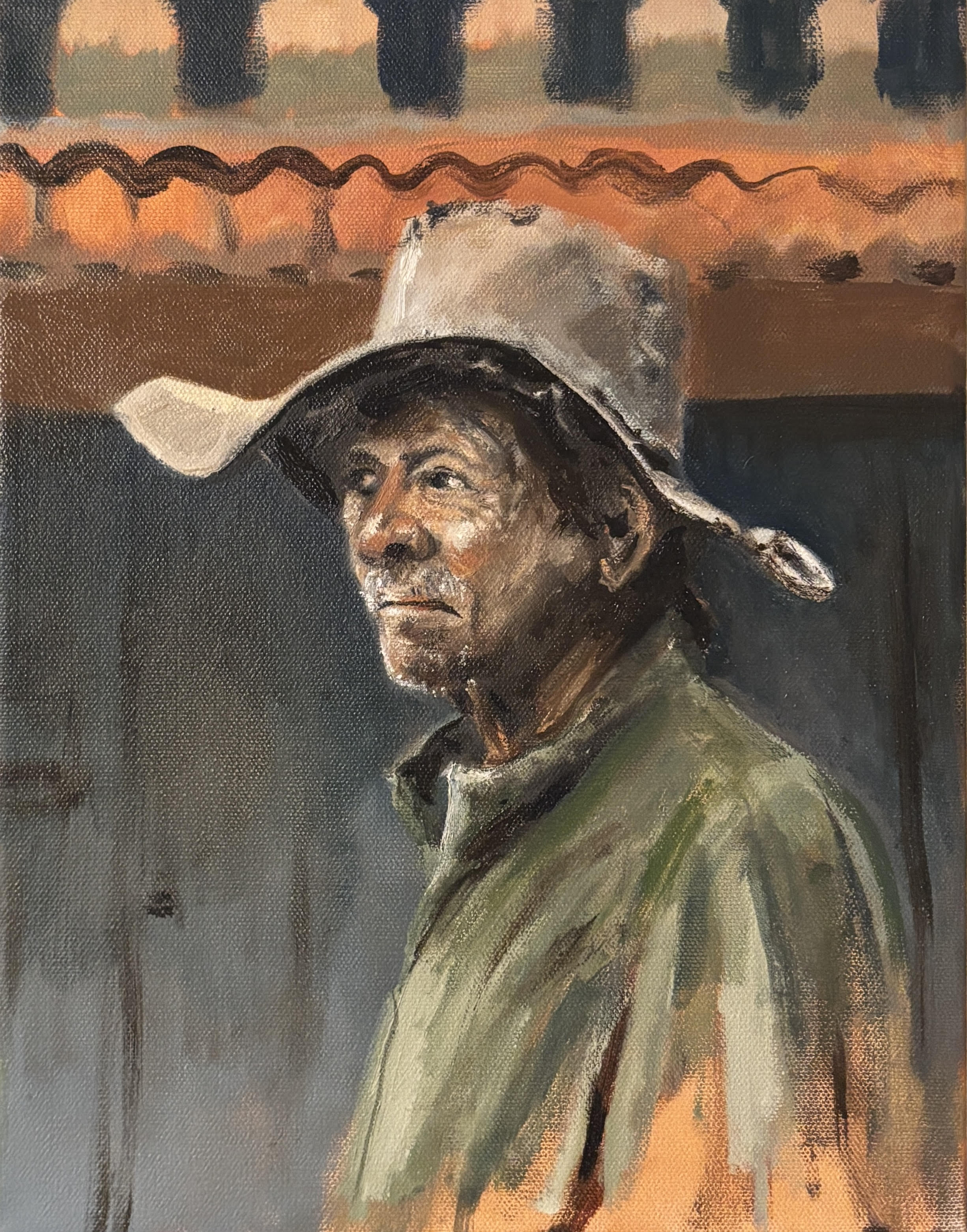
The journey of perception is ongoing. Using the "Old Man from Maracaibo" as a centerpiece, I am launching a new interactive study to bridge the distance between Zulia and Vancouver.
If you are visiting the gallery or viewing the collection online, I invite you to participate via my Linktree. Your digital input on the resilience and atmosphere of this portrait will be synthesized into our next major reflection. By sharing your perspective, you aren't just observing the work — you are completing it.
Conclusion
This experiment reaffirmed my path. The tension between structure and expression is not a problem to solve — it is the very space where the art lives. The work exists somewhere between what is made and what is received.
Daniel Ali Velázquez de Pool
Painter · Vancouver, BC · March 2025